Tuesday, 3 February 2015

Botany in the Modern World..

                                               Botany in the Modern World

                                                        RATHIN DAS
                                                                        S2 BSc boany
                                                                                 
All life on earth, including us, depends on plants for their continued existence. Botanists can study plants at various levels, many of which are reflected in the courses offered by the School of Botany. We have considerable expertise in all aspects of plant molecular biology and biotechnology, disciplines that are increasingly important as the world strives to feed its population and to avoid the ravages of plant diseases. The diversity and uniqueness of Australian flora supplies the excitement of our systematics and diversity classes, and we offer the chance to go out into the field with experts who have studied these plants in a variety of familiar ecosystems such as our eucalypt forests and the subalpine high plains. We also show students the wonderful world of protists, especially those tiny but critically important phytoplankton and the larger seaweeds that ultimately feed all of the animals in the oceans. We study the way plants adapt to environments ranging from tropical rainforests to deserts, and we study how best we can overcome the problems of environmental degradation such as those derived from toxic metals and salinity. We have specialists in physiology, conservation and population modelling, fossils and plant diseases.
Majoring in Plant Sciences...
Students who take courses in plant sciences are introduced into many different modern technologies, as diverse as gene sequencing, cladistic analysis, microscopy and polysaccharide biochemistry - skills that are sought after by employers. Students are introduced to the scientific method: how experiments are devised, carried out and interpreted, how data are organised and presented and how a variety of different approaches are sometimes necessary to tackle big problems.
When you first arrive, the range of courses, majors etc. will be confusing and you probably are very uncertain about what you should do. You really don't need to worry; there is plenty of advice on offer, either informally in departments, or more formally at Course Advising Sessions that are well publicised throughout the year.
As a first-year student, you will start by taking an appropriate first-year package, including the general introductory courses. As you approach the end of your first year, you can start thinking more about Majors in Plant Sciences.There is an important Course Advising Week in second semester, during which your queries about how to proceed further will be answered. We also have brochures which will familiarise you with our offerings.
You will start to specialise in second year when choice of subjects becomes more important. However, the structures of the major are flexible and many students change their focus - and their course specialisations - as their interests develop. By third year, you will have a major and area of specialisation firmly in mind, and you might also be thinking of taking Honours.
To Major in Plant Sciences (i.e. Botany), you will need to fulfil the standard Science requirement of at least 50 points of a prescribed major course at the 300 level. Majors specifically in Plant Sciences.
You will be advised in the Department what courses you will need for these majors and a brochure with more information is available at the Botany Office.

Friday, 30 January 2015

  Incredible   Traditional           Medicine

      Sharanya raj 
       s6 BSc botany 

   The rich floral wealth of the earth is fascinating ever,the time immemorial.the value of plants were known to we started to learn how there floral wealth can be utilized for our purposes ancient man utilized dried twigs for making fire,as defense ,for shelter as food etc.But when he started cultivation the valuable incentives of the plants were then revealed.It can be cultivated in plenty,

their seed can be stored, some of them can be used as medicines , some can be used as timbers etc.. So,there valuable knowledge by acquiring through generation and generation reached to the parent world Then revealed the rich tradition of each spot. Tradition, there by help to deliver the part history how there historical evidences to be manipulated or utilised in the parent day society. The richness of Asian medicinal plant(AMP) can be seen in Bulgarian tradition and Bulgaria is one of the largest producers of medicinal herbs is the world exerting a total of 12000 tons per year

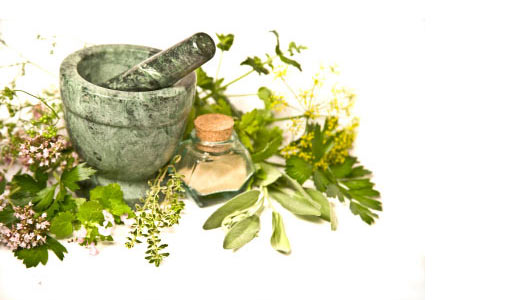
medicinal properties of plants(phytomedicina) have immense application in every field of industrial each and every plant in this universe have medicinal properties and how we are able to identify a very few plants until know is a drop and unknown is an ocean ,fill now phytomedicines are now playing an important role in curing many diseases. Not only in ayurveda ,but also in alopathy ,phytomedicines are using .They can be used as immune stimulants ,memory enhances ,anti tumer agent,relatives ,aphroclisiasis,antimuties , body reducers ,blood pressure reducers etc

Ethano botany reveals the tradition of dift contries area in relation to the plant wealth .so, by incorporated ethano botany with phytomedicines an hybrid of tradition rich plant with phytomedicins can be formulated thus in the near by future we can cure any diseases including the most clear ful cancer also by means of phytomedicines